
-
Yuri Tools Bevel Protractor 5-Min Graduation with 60°/45°/30° Edges
Regular price Rs. 0.00Regular priceUnit price per
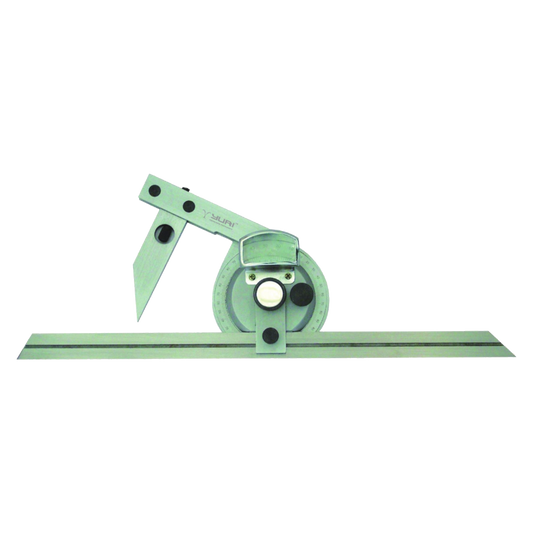
Bevel Protractors Built for Accurate Angle Measuring Work
A bevel protractor may look like a simple measuring tool, but in real workshop work it can save a lot of time, material, and rework. When a cut, bend, joint, blade setting, fixture, or marked line needs to follow a particular angle, guessing is not enough. Even a small angle mistake can affect fitting, alignment, surface finish, or the final look of the job.
Yuri bevel protractors are made for users who need clear angle checking and marking in everyday work. They are useful in metal fabrication, carpentry, machining, maintenance, inspection, tool rooms, and general workshop use. Whether you are checking a bevel edge, setting a machine angle, marking a workpiece, or matching an existing angle, a good bevel protractor helps you work with better confidence.
This collection is suitable for professionals who want a dependable angle measuring tool that is easy to handle, practical to carry, and useful across different materials and working conditions.
Why Bevel Protractors Are Useful
Many workshop jobs depend on accuracy. A pipe joint, metal frame, wooden edge, machine setup, or construction fitting may look fine at first, but if the angle is slightly wrong, the final assembly can become difficult. A bevel protractor helps users measure and transfer angles more neatly instead of relying only on eye judgement.
It is especially useful when working on angled cuts, bevelled edges, layout marking, inspection work, and repeated angle checking. For fabricators and carpenters, it helps maintain consistency. For maintenance teams, it helps match existing angles on machines, brackets, panels, and fixtures. For inspection teams, it gives a simple way to verify whether the job has been done as required.
- Checking and marking angles on metal, wood, and fabricated parts
- Setting or verifying bevel cuts before finishing work
- Measuring angles on brackets, fixtures, frames, and panels
- Matching an existing angle during repair or replacement jobs
- Supporting inspection work in workshops and tool rooms
- Helping workers reduce trial-and-error during layout work
Why Choose Yuri Bevel Protractors
A measuring tool should feel stable in the hand. It should also be easy to read, easy to adjust, and strong enough for daily handling. Yuri bevel protractors are designed with these practical needs in mind. The goal is simple: help the user take angle measurements and markings without making the process complicated.
In many Indian workshops and job sites, tools are used throughout the day, moved from bench to bench, and handled by different workers. A bevel protractor needs to be durable, but it also needs to stay comfortable and clear during use. Yuri focuses on tools that support real working habits, not just clean showroom conditions.
- Useful for daily angle measuring and marking work
- Easy handling for workshop and site users
- Practical design for metalworking, woodworking, and maintenance
- Helpful for layout, checking, fitting, and inspection tasks
- Suitable for professionals as well as regular workshop teams
Where Bevel Protractors Are Commonly Used
A bevel protractor is not limited to one trade. It is one of those tools that quietly becomes useful in many areas because angles appear everywhere in practical work. In fabrication shops, it can help mark pipe joints, frames, plates, and brackets. In woodworking, it helps when checking mitres, edges, panel angles, and custom fitting work.
In machine shops and tool rooms, a bevel protractor can support setup checks, part inspection, and routine measurement work. In maintenance departments, it helps when a replacement part needs to match the angle of an older part. For construction and installation teams, it can support layout checks before drilling, fixing, cutting, or assembling.
Quick Application Guide
| Work Area | How a Bevel Protractor Helps |
|---|---|
| Fabrication shops | Checks angles on frames, plates, brackets, pipe work, and bevelled edges |
| Woodworking and carpentry | Helps mark mitre cuts, sloped edges, furniture angles, and panel layouts |
| Machine shops | Supports setup checking, inspection work, and part angle verification |
| Maintenance teams | Makes it easier to match angles during repair and replacement work |
| Installation work | Useful for layout checks before fixing, drilling, cutting, or fitting parts |
Using Bevel Protractors with Other Workshop Tools
Angle measuring often happens before or after cutting, drilling, sanding, and fitting. After cutting or grinding work, dust can settle on the bench and make marking less clear. Keeping the workspace clean with an electric blower or an electric air blower can make measurement and layout work easier. In busy workshops, even a basic air blower machine helps keep the marking area visible and safer to work around.
When a bevelled edge needs light finishing after cutting or shaping, a velcro disc can be useful for smoother sanding and surface preparation. Depending on the job, workers may also use a grinder sanding disc or velcro sanding disc to clean edges before the final inspection or assembly.
For users working around agricultural setups, field equipment, or outdoor installation tasks, accurate angles may also matter while checking frames, supports, and attachments. Yuri also offers agricultural tools for field-focused work, including soil drilling tools and land preparation tools used in specific ground preparation applications.
How to Choose the Right Bevel Protractor
Choosing a bevel protractor should be based on the kind of work you do most often. If you mostly handle basic marking and angle checking, a simple and easy-to-read model may be enough. If your work needs repeated measurement, inspection, or machine setup, choose a tool that feels more stable and allows smoother adjustment.
Readability is important. Workers should be able to check the angle without straining their eyes, especially in workshops where lighting may not always be perfect. The locking system also matters because the set angle should not move while marking or transferring the measurement to the workpiece.
- Check whether the measuring range suits your daily work
- Choose a clear scale that is easy to read in workshop lighting
- Look for stable locking so the angle does not shift during marking
- Consider blade length based on the size of your workpiece
- Pick a tool that feels comfortable and balanced in the hand
- Store it properly so the measuring edge stays clean and accurate
Who Can Use Yuri Bevel Protractors?
- Fabricators and welders
- Carpenters and furniture makers
- Machine shop workers
- Tool room and inspection teams
- Maintenance technicians
- Construction and installation workers
- Workshop owners and supervisors
- DIY users who need cleaner angle marking
Care and Maintenance Tips
A bevel protractor lasts longer when it is handled like a measuring tool, not like a rough workshop accessory. It should not be dropped, used as a scraper, or left under heavy tools. Dust, oil, and metal particles can affect smooth movement and readability, so a quick wipe after use is always a good habit.
Store the tool in a dry place and avoid exposing it to unnecessary moisture. If the scale becomes dirty, clean it gently instead of rubbing it with harsh materials. These small habits help maintain accuracy and keep the tool ready for the next job.
- Wipe the tool clean after use
- Avoid dropping or bending the measuring blade
- Do not use it as a prying or scraping tool
- Keep the scale clean and readable
- Store it away from moisture and heavy tools
- Check locking movement before important measurement work
FAQs
What is a bevel protractor used for?
A bevel protractor is used to measure, mark, and transfer angles on metal, wood, machined parts, frames, panels, and other workpieces.
Can a bevel protractor be used in fabrication work?
Yes. It is commonly used in fabrication work to check angles on frames, brackets, bevelled plates, pipe joints, and layout markings.
Is a bevel protractor useful for woodworking?
Yes. Carpenters and furniture makers can use it for mitre checks, sloped edges, panels, and custom angle marking.
How do I keep a bevel protractor accurate?
Keep it clean, avoid dropping it, do not force the locking parts, and store it in a dry place away from heavy tools.
Who should buy a bevel protractor?
It is useful for fabricators, carpenters, machine shop workers, inspection teams, maintenance staff, installers, and serious DIY users.
Explore Yuri Bevel Protractors
Yuri bevel protractors are made for users who value clean marking, accurate angle checking, and dependable workshop tools. They help reduce guesswork and make everyday layout, inspection, and fitting work easier to manage.
From fabrication shops and machine rooms to carpentry benches and maintenance teams, a reliable bevel protractor is a small tool that can make a noticeable difference in the quality of work. If your job depends on getting angles right, this collection is a practical place to start.