Cutting Wheels for Metal
-
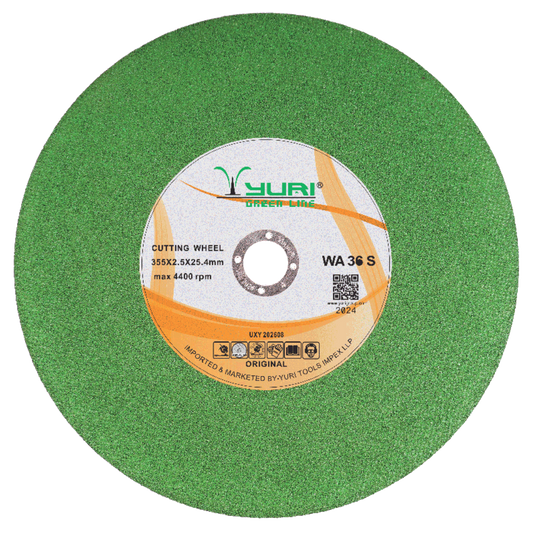
Yuri Greenline Super Thin Cutting Wheel, 107mm to 400mm Metal Cut-Off Disc
Regular price From Rs. 2,250.00Regular priceUnit price per -
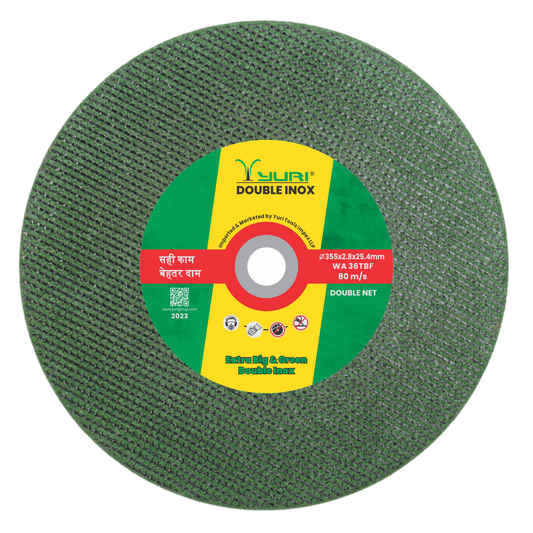
Yuri Double Inox Reinforced Cut-Off Wheel for Stainless Steel and Metal
Regular price From Rs. 2,500.00Regular priceUnit price per -
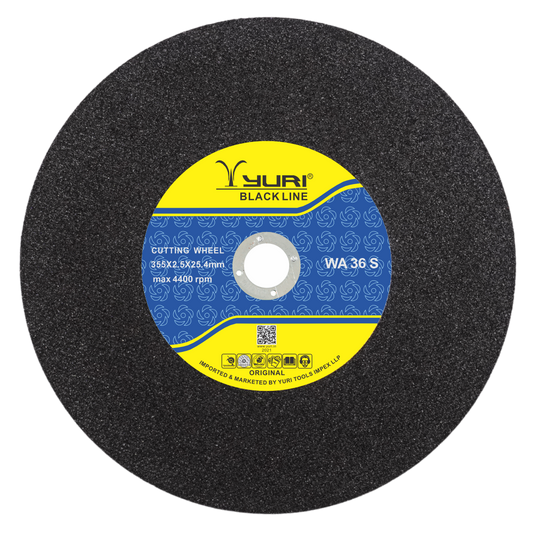
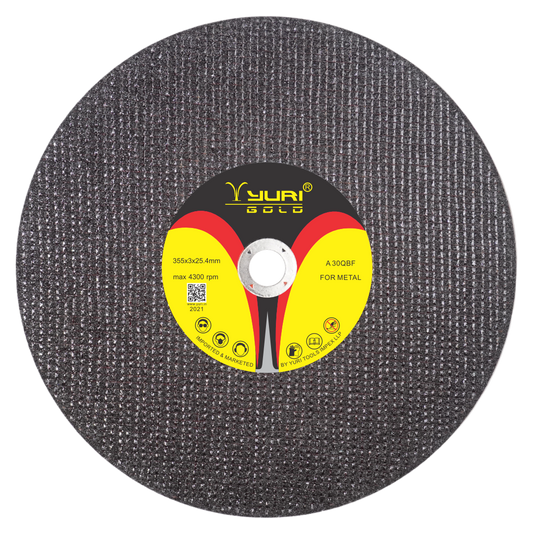
Yuri Blackline 355mm Cut-Off Wheel, 2.5mm Metal Cutting Disc (Pack of 25)
Regular price Rs. 7,750.00Regular priceUnit price per -
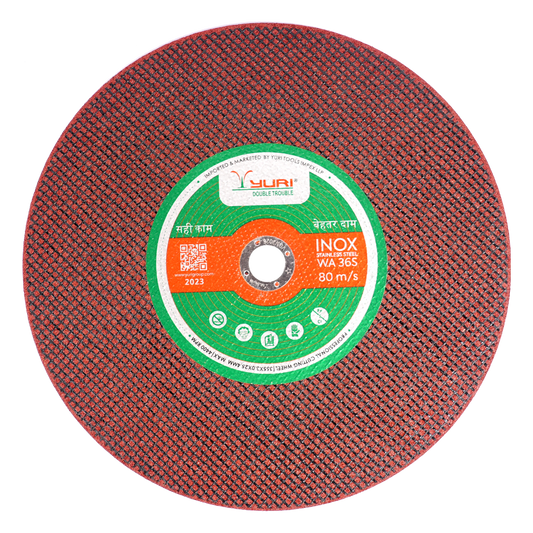
Yuri Double Trouble Net Cut-Off Wheel for Metal Cutting
Regular price From Rs. 2,500.00Regular priceUnit price per -
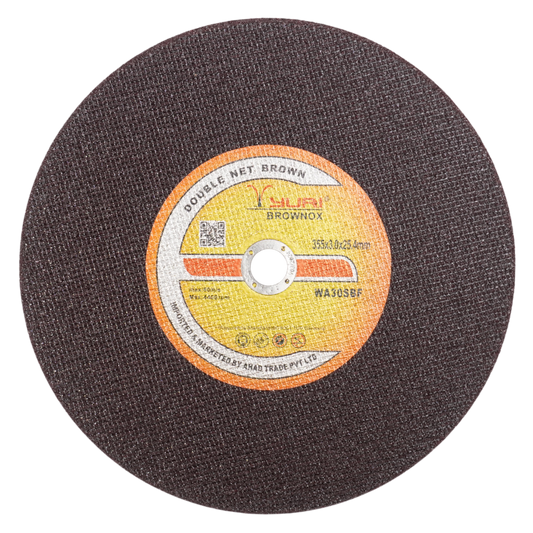
Yuri Brownox Reinforced Cut-Off Wheel for Fast Steel Cutting
Regular price Rs. 0.00Regular priceUnit price per -
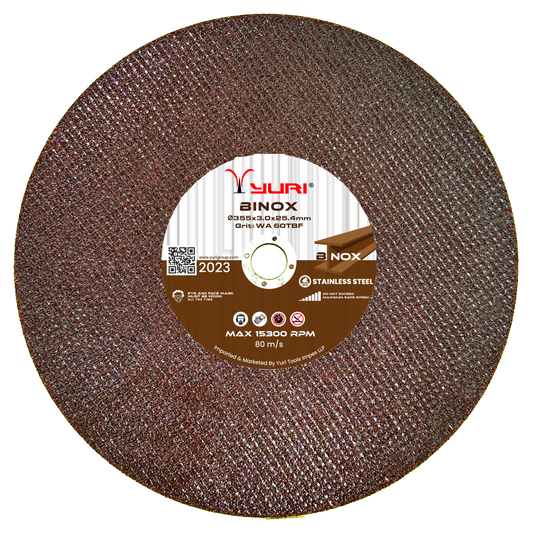
Yuri Bi-Nox Double Net Cut-Off Wheel, 107mm and 355mm Metal Disc
Regular price Rs. 8,000.00Regular priceUnit price per -
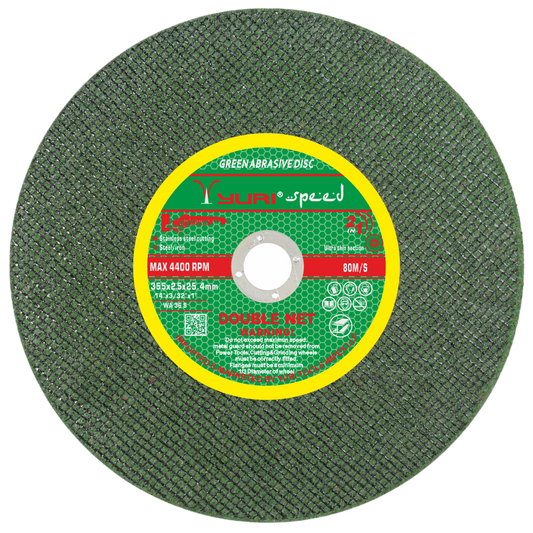
Yuri Speed Thin Cut-Off Wheel for Angle Grinder and Metal Work
Regular price From Rs. 2,250.00Regular priceUnit price per -
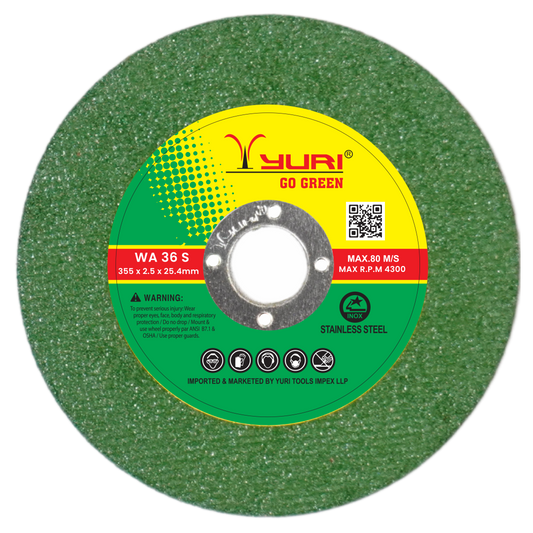
Yuri Go Green Cut-Off Wheel with Single and Double Net Options
Regular price From Rs. 2,500.00Regular priceUnit price per -
Yuri Gold 355mm Double Net Cut-Off Wheel for Heavy Metal Cutting
Regular price Rs. 0.00Regular priceUnit price per -
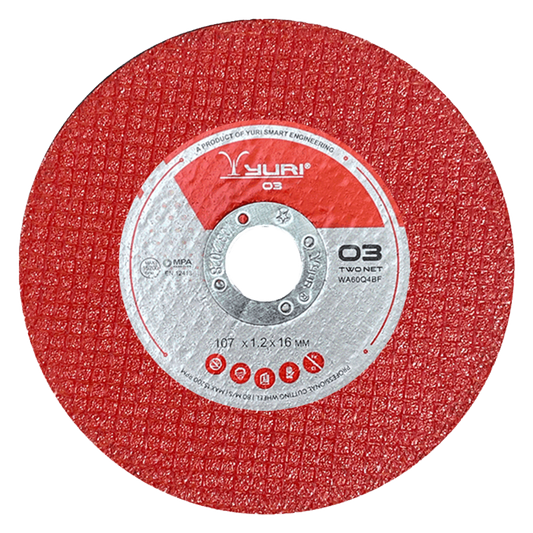
Yuri O3 Double Net Cutting Wheel, 107mm and 355mm Metal Disc
Regular price Rs. 0.00Regular priceUnit price per -
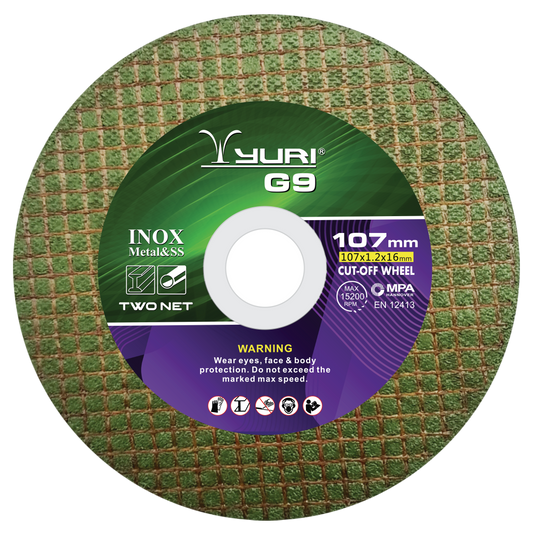
Yuri G9 107mm Cutting Wheel, 1.2mm Cut-Off Disc for Metal
Regular price From Rs. 1,000.00Regular priceUnit price per -
Yuri Red Race 107mm Reinforced Cutting Wheel for Fast Cuts
Regular price From Rs. 1,000.00Regular priceUnit price per -
Yuri Super Cut 107mm Cutting Wheel with WA/F60Q4BF Spec
Regular price Rs. 0.00Regular priceUnit price per -
Yuri Tailin Cutting Wheel, 100mm and 125mm Heavy Cut-Off Disc
Regular price Rs. 0.00Regular priceUnit price per -
Yuri Ultra Red 107mm WA60S Cutting Wheel
Regular price Rs. 0.00Regular priceUnit price per -
Yuri Longlife Metal Cutting Wheel, 107mm to 180mm
Regular price Rs. 0.00Regular priceUnit price per
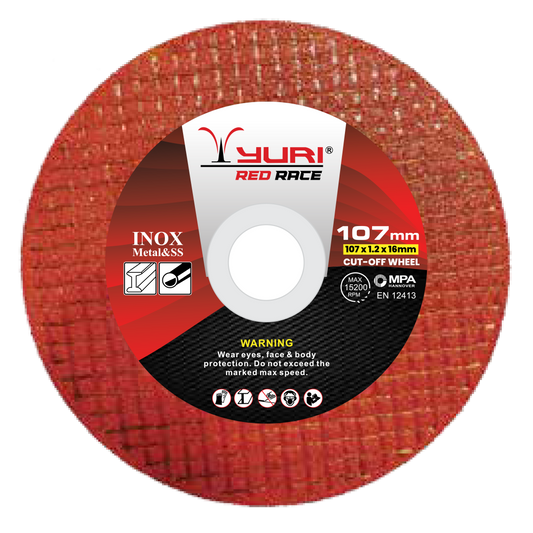
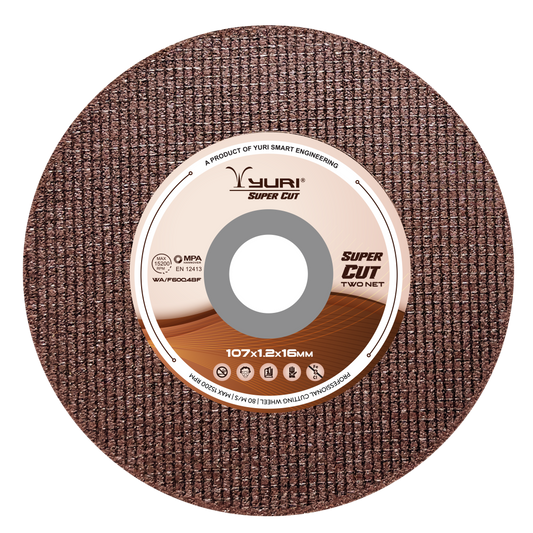
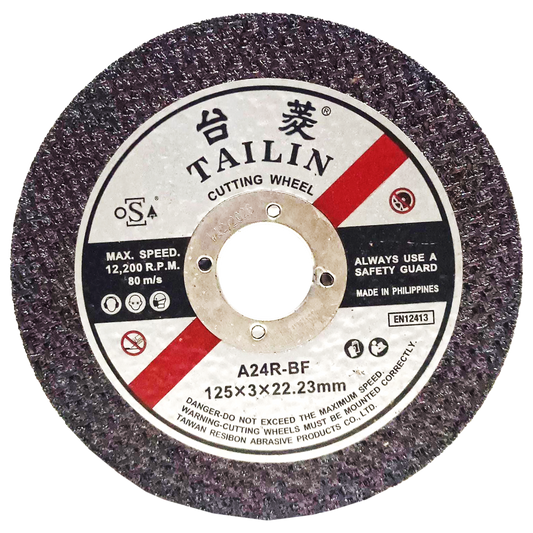


Choose a cutting wheel for your metal
These cut-off wheels belong to Yuri’s wider abrasives range. Select a wheel whose material marking covers the metal you are cutting. For stainless steel, use a wheel expressly rated for stainless steel; if the job has contamination limits, confirm the exact wheel’s composition with the manufacturer.
Match diameter, thickness and bore
Wheel dimensions are written as diameter × thickness × bore. The diameter must suit the machine, while the bore must match its mounting requirements. Thickness affects the width of the cutting line: a thinner disc removes less material along that line.
Selected wheel specifications
| Wheel selection | Dimensions | Net specification | Listed RPM |
|---|---|---|---|
| Yuri G9, 107mm | 107 × 1.2 × 16mm | 2NET | 15,200 |
| Yuri Greenline Super Thin, 125mm | 125 × 1.2 × 22mm | 1NET | 12,200 |
| Yuri Blackline, 355mm | 355 × 2.5 × 25.4mm | 1NET | 4,400 |
These figures apply to the selections shown. The net entry identifies single- or double-net construction. Compare it alongside the dimensions and material specification rather than treating net count as a standalone measure of cutting speed or service life.
Your machine’s maximum no-load speed must not exceed the maximum speed marked on the wheel. Use the rating for the exact size selected; different sizes within one product range can have different limits.
Compare like-for-like order packs
Use the pack quantity in the selected purchase option when comparing prices. A specification table’s carton quantity may differ from that order pack. Divide the selected pack price by its wheel count to calculate cost per wheel, then compare equivalent dimensions, material specifications and reinforcement versions.
Finish cut edges with a separate abrasive
For deburring or surface finishing after cutting, browse Yuri’s flap discs for metal finishing. Choose a finishing disc with a suitable material rating and machine fit. A cutting wheel should not be pressed sideways against the work for grinding.
Use the specified guard, mounting components and protective equipment, and inspect the wheel before use. Read Yuri’s cutting-wheel safety guide for more detail on inspection, mounting and handling.
Choosing a cutting wheel
For a selection checklist covering wheel type, dimensions and machine requirements, read the cutting-wheel buying guide. Use the size and operation marking for the particular wheel when comparing the options above.
People also ask
Can I use a 107mm cutting wheel on a 100mm grinder?
Use only a diameter and specification expressly permitted by the machine manufacturer. A 107mm wheel is larger than a 100mm wheel; a rounded “4-inch” description is not enough to establish fit.
Do all sizes in a cutting-wheel range have the same RPM rating?
No. For example, Greenline Super Thin lists 15,200 RPM for its 107mm size and 4,400 RPM for its 355mm size. Follow the marking on the selected wheel and the machine’s instructions.
How long does a cutting wheel last?
There is no single lifespan for every job. Wear varies with the wheel specification, material, section being cut and operating conditions. Follow the manufacturer’s replacement guidance rather than a fixed number of cuts.
How should unused cutting wheels be stored?
Keep them dry and protected from impact, moisture and heavy loads. Follow the manufacturer’s shelf-life and storage instructions, and inspect the wheel before mounting.