
-
Dayuri YSS125B 125mm Straight Grinder
Regular price Rs. 0.00Regular priceUnit price per
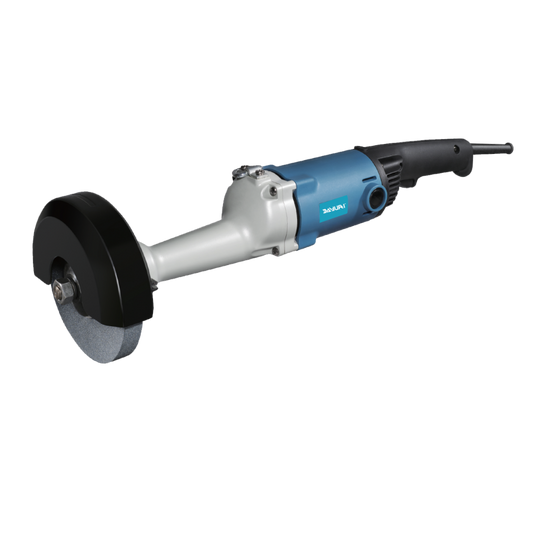
Straight Grinder Machines Built for Neat, Controlled Finishing Work
A straight grinder is one of those tools that often looks simple at first, but once it is used in a workshop, its value becomes very clear. It helps users reach narrow areas, clean edges, shape metal, smooth welds, remove burrs, and finish surfaces where a larger grinder may feel too bulky. For fabricators, welders, maintenance teams, repair workshops, and industrial users, a straight grinder machine can save time on the small but important finishing tasks that affect the final quality of the job.
Yuri straight grinders are made for practical working conditions where users need grip comfort, steady speed, and better control. In Indian workshops and job sites, tools are often used for long hours, sometimes in tight corners, dusty areas, or repair situations where accuracy matters. A good straight grinder should feel balanced in the hand, run smoothly, and allow the user to work close to the surface without losing control.
Why Straight Grinders Are Useful
Many grinding jobs are not about removing large amounts of material. Sometimes the work is about cleaning a weld line, smoothing a sharp edge, opening a small slot, removing rust from a corner, or refining a part after cutting. These are the moments where a straight grinder becomes useful. Its slim body and straight-line design make it easier to work in areas where regular tools may not reach comfortably.
A straight grinder is also helpful when the user needs more control over finishing. Since the tool is held close to the work area, it gives a better feel of the surface. This is especially useful for metal fabrication, machine repair, mould finishing, automotive work, and maintenance jobs where small errors can affect the fit or finish of a part.
- Cleaning weld marks and metal edges
- Removing burrs after cutting or drilling
- Grinding inside narrow or hard-to-reach areas
- Surface preparation before painting or finishing
- Rust removal and light material shaping
- Repair work in workshops and industrial units
- Finishing metal parts with better control
Why Choose Yuri Straight Grinder Machines
Yuri straight grinder machines are designed for users who need dependable tools for everyday work. The focus is not only on motor power, but also on handling, control, and long-use comfort. A tool may have good speed, but if it feels awkward or unstable in hand, the user will struggle during detailed finishing work.
Yuri keeps the working experience practical. The grip, body design, and power delivery are made to support regular workshop use. This makes the machine suitable for professionals who handle finishing work throughout the day, as well as users who need a reliable tool for repair and maintenance applications.
For very fine internal grinding, tool-room work, and small finishing jobs, many users also compare a straight grinder with a die grinder machine. Both tools are useful, but the right choice depends on the size of the job, the accessory being used, and the level of control required.
If your team mainly handles fine detailing or internal finishing, an electric die grinder can also be considered, but for slightly broader controlled grinding, a straight grinder often feels more stable in hand.
- Comfortable handling for regular use
- Slim design for better reach in narrow areas
- Stable performance for finishing and repair work
- Useful for fabrication, maintenance, and metal workshops
- Practical tool design for Indian working conditions
- Suitable for controlled grinding instead of heavy material removal
Common Uses of a Straight Grinder
A straight grinder is often used after cutting, welding, or drilling work. Once the main work is complete, the surface usually needs some kind of finishing. Edges may be rough, welds may need cleaning, holes may have burrs, or metal parts may need final shaping. A straight grinder helps handle these smaller finishing steps with more accuracy.
In fabrication units, the tool can be used to clean metal joints and improve edge quality. In automotive repair, it helps with rust removal, shaping, and surface preparation. In maintenance departments, it is useful for cleaning machine parts, removing old material, and reaching areas where bigger tools cannot work easily.
For heavier stock removal, cutting support, or larger surface grinding, users may also need an angle grinder machine. A straight grinder is better for precision and reach, while an angle grinder is better suited for broader grinding and cutting work.
For users comparing tools for heavier site work, the best angle grinder will usually be the one that matches the cutting or grinding load, while the straight grinder is chosen for reach, detail, and finishing control.
Straight Grinder vs Die Grinder vs Angle Grinder
These tools may look related, but they are not used in the exact same way. A straight grinder is generally chosen for controlled grinding and finishing where reach and accuracy matter. A die grinder is often used for smaller detailing jobs, especially with mounted points, burrs, and compact accessories. An angle grinder is stronger for larger jobs such as cutting, grinding welds, and working across wider surfaces.
For example, if a worker needs to smooth a sharp inner edge or clean a small metal section, a straight grinder can feel more comfortable. If the job involves trimming a metal bar or grinding a large weld line, an angle grinder will usually make more sense. If the job is small, detailed, and inside a tight part, a die grinder may be the better option.
| Tool Type | Best For | Typical Users |
|---|---|---|
| Straight Grinder | Controlled grinding, edge cleaning, burr removal, and narrow-area finishing | Fabricators, welders, repair teams, maintenance users |
| Die Grinder | Fine detailing, internal grinding, mould work, and small finishing jobs | Tool rooms, automotive repair, precision workshops |
| Angle Grinder | Cutting, heavy grinding, weld cleaning, and larger surface work | Fabrication units, construction workers, metal workshops |
How to Choose the Right Straight Grinder
Before choosing a straight grinder, it helps to think about the kind of work you do most often. If your work involves regular fabrication or repair, look for a machine that feels strong enough for repeated use. If your tasks are mainly light finishing jobs, comfort and control may be more important than high power alone.
Speed, grip design, accessory compatibility, and tool weight all matter. A machine that is too heavy can become tiring during detailed work. A machine that feels too light but lacks stability may not give the finish you want. The best choice is usually the one that gives enough power without making the tool difficult to control.
- Check the type of material you work on most often
- Choose the right accessory for grinding, cleaning, or finishing
- Look for a comfortable grip if the tool will be used for long hours
- Make sure the machine gives steady speed under normal load
- Select a tool that suits workshop, site, or maintenance work
- Avoid using one machine for every task when a different grinder is more suitable
Accessories and Finishing Support
The performance of a straight grinder also depends on the accessory used with it. The right mounted wheel, burr, grinding point, or finishing attachment can make the work cleaner and faster. Using the wrong accessory may create vibration, poor finish, or unnecessary load on the machine.
After grinding or burr removal, some surfaces may still need smoother finishing. For that stage, Yuri also offers sanding machine options and sanding tools that can help improve surface quality before painting, coating, or final assembly.
A sander machine is especially helpful when the final surface needs to look smoother and more uniform after the grinding stage is complete.
This is why many professionals keep more than one finishing tool in the workshop. A straight grinder handles controlled grinding and reach. A sander helps refine the surface. A larger grinder supports heavier work. Together, these tools help users finish jobs more neatly instead of forcing one machine to do everything.
Who Can Use Yuri Straight Grinders?
Yuri straight grinders are suitable for users who regularly work with metal, repair parts, or handle finishing jobs. The tool is especially useful in places where accuracy matters and the user cannot depend only on larger grinders.
- Metal fabrication workshops
- Welding units
- Automotive repair workshops
- Industrial maintenance teams
- Machine repair technicians
- Construction support teams
- Tool rooms and repair units
- Professional users who need controlled finishing work
Safety and Maintenance Tips
A straight grinder should always be used carefully because it works at high speed and often handles metal surfaces. Wear proper eye protection, gloves, and suitable work clothing. Make sure the accessory is fixed correctly before starting the machine. If the tool vibrates more than usual, stop and check the accessory before continuing.
Do not force the grinder into the material. Let the tool and accessory do the work at a controlled pace. After use, clean the machine, remove dust from the air vents, and store it in a dry place. Regular care helps the tool perform better and last longer.
- Wear safety glasses and gloves
- Use only suitable accessories for the tool
- Check the accessory before starting work
- Avoid excessive pressure during grinding
- Keep hands away from the rotating accessory
- Clean dust and metal particles after use
- Store the machine safely in a dry area
FAQs
What is a straight grinder used for?
A straight grinder is used for controlled grinding, burr removal, edge cleaning, rust removal, and finishing work in narrow or hard-to-reach areas.
Is a straight grinder the same as a die grinder?
No, they are similar in some applications, but they are not exactly the same. A die grinder is often used for smaller detailing work, while a straight grinder is useful for controlled grinding and finishing on slightly larger areas.
Can I use a straight grinder for metal work?
Yes, straight grinders are commonly used for metal work, especially for cleaning edges, removing burrs, and finishing welded or cut sections.
When should I use an angle grinder instead?
Use an angle grinder when the job involves heavier cutting, larger surface grinding, or stronger stock removal. A straight grinder is better when reach and control matter more.
How do I get a better finish with a straight grinder?
Use the correct accessory, avoid forcing the tool, keep a steady hand, and finish the surface with sanding tools when a smoother result is needed.
Explore Yuri Straight Grinder Machines
Yuri straight grinder machines are built for users who need better reach, steady control, and reliable finishing performance in daily work. Whether the job is in a metal workshop, repair unit, fabrication site, or maintenance department, a straight grinder can help make finishing tasks cleaner and easier to manage.
From burr removal to edge cleaning and narrow-area grinding, Yuri straight grinders give professionals a practical tool for the details that make a job look complete.