
-
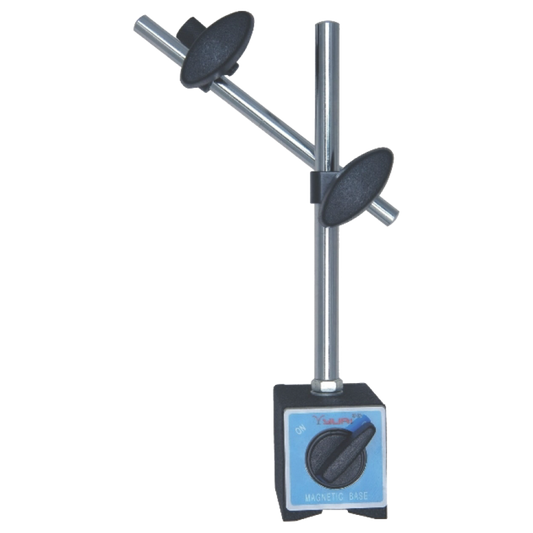
Yuri Magnetic Stand
Regular price Rs. 0.00Regular priceUnit price per
Magnetic Stands Built for Stable Measuring and Workshop Accuracy
A magnetic stand may look like a small workshop accessory, but anyone who works with measurement, alignment, inspection, or machine setup knows how useful it becomes during everyday work. It gives a firm holding point for dial gauges, indicators, and other measuring tools, so the user can check runout, alignment, depth, flatness, and small movement without struggling to hold the instrument by hand.
Yuri magnetic stands are made for workshops, maintenance teams, fabrication units, tool rooms, and inspection areas where accuracy matters. When a job needs both hands free and a measuring instrument must stay steady, a good magnetic stand makes the work easier, cleaner, and more reliable. It helps reduce small mistakes that can happen when the tool moves, slips, or is not positioned properly.
Why Magnetic Stands Are Useful in Daily Work
In many workshops, the difference between a proper fit and a poor fit can be very small. A shaft may need checking, a surface may need inspection, or a machine part may need alignment before the final setup. In such cases, holding a measuring device by hand is not practical. Even a slight hand movement can change the reading and create confusion.
A magnetic stand solves this by giving the measuring tool a stable base. The magnet grips firmly to a metal surface, while the adjustable arm helps place the gauge or indicator exactly where the user needs it. This is especially helpful in machine shops, repair units, metalworking areas, and quality inspection setups where repeat readings need to be steady.
- Checking shaft runout and movement
- Holding dial gauges during inspection
- Aligning machine parts before operation
- Measuring small surface variations
- Supporting quality checks in workshops
- Reducing hand movement during measurement
- Improving control during setup and adjustment
Why Choose Yuri Magnetic Stands
A magnetic stand should feel firm, easy to adjust, and dependable during repeated use. If the magnet is weak or the arm does not lock properly, the reading may shift while the user is working. That can waste time and affect the final result. Yuri magnetic stands are designed with practical workshop use in mind, where tools are handled regularly and need to perform without unnecessary adjustment problems.
The aim is simple: keep the measuring instrument steady, make positioning easy, and allow the user to work with more confidence. This helps during small inspection jobs as well as regular machine setup work. For teams that use different tools across machining, repair, and fabrication areas, a magnetic stand becomes one of those items that quietly improves everyday accuracy.
Where Magnetic Stands Are Commonly Used
Magnetic stands are mostly used with gauges and indicators, but their usefulness is not limited to one type of workshop. They are common in tool rooms, fabrication shops, automotive repair units, maintenance departments, and inspection benches. When paired with the right measuring instruments, they help workers take more stable and repeatable readings.
In a machine shop, a magnetic stand can help check whether a rotating part is running true. In an automotive workshop, it may be used for inspection during repair or fitting work. In fabrication units, it supports alignment checks before welding, fitting, or assembly. Even in general maintenance, it helps technicians confirm small movements instead of guessing by eye.
The real value of a magnetic stand is seen when the work needs patience. It allows the user to set the gauge once, lock the position, and then focus on the reading. This makes it easier to work neatly, especially when the same measurement needs to be checked more than once.
How to Choose the Right Magnetic Stand
Choosing a magnetic stand depends on the type of inspection work you do. For light workshop measurement, a compact stand may be enough. For heavier use, choose a stand with a stronger base, better arm locking, and smoother adjustment. The stand should hold the measuring tool firmly without drifting after it is locked.
The base size, magnetic strength, arm length, adjustment style, and compatibility with indicators should all be checked before purchase. A stand that is too small may not feel stable for certain jobs, while a stand that is too bulky may feel difficult to position in tight spaces. The right choice should match the user’s machine size, working area, and inspection needs.
- Check the magnetic holding strength
- Choose the arm length based on the work area
- Make sure the adjustment knobs lock properly
- Match the stand with the gauge or indicator you use
- Choose a stable base for regular inspection work
- Look for easy movement and firm locking
Magnetic Stands for Workshops, Machines, and Field Teams
A magnetic stand is mainly connected with inspection and measurement, but it is often used around many other workshop tools as well. For example, teams working with woodworking equipment may use an electric planer for shaping surfaces and then depend on measuring tools to check straightness, alignment, or finishing quality. In a busy workplace, each tool supports a different part of the job.
The same practical thinking applies in outdoor and farm-related work. Users who manage machinery, repairs, and equipment maintenance often move between different tool categories, including agricultural tools. A magnetic stand may not be used directly for every field task, but it becomes useful when checking, repairing, or maintaining metal parts and machinery in a workshop setting.
This is why many professional users prefer keeping inspection accessories ready along with their main machines. It saves time when a part needs checking before fitting, after repair, or during final inspection. Instead of waiting for a separate quality check, the worker can quickly set the indicator on the magnetic stand and confirm the reading on the spot.
Quick Selection Guide
| Work Need | What to Check | Why It Matters |
|---|---|---|
| Light inspection work | Compact stand with easy adjustment | Useful for small benches and regular checking |
| Machine alignment | Strong magnetic base and firm arm lock | Helps keep readings steady while adjusting parts |
| Repeated workshop use | Durable body and smooth locking knobs | Reduces movement and saves setup time |
| Tight work areas | Flexible arm length and base size | Makes positioning easier around machines |
Who Can Use Yuri Magnetic Stands?
- Machine shop operators
- Tool room teams
- Quality inspection staff
- Fabrication workers
- Automotive repair workshops
- Maintenance technicians
- Industrial repair units
- Workshop owners and supervisors
Care and Usage Tips
A magnetic stand will perform better when it is used and stored properly. Keep the magnetic base clean because dust, metal chips, and oil can reduce grip. Before taking a reading, place the stand on a clean metal surface and check that the base is fully seated. After positioning the arm, tighten the adjustment points gently but firmly.
Avoid dropping the stand or forcing the knobs too hard. If the stand is used near grinding, cutting, or machining work, clean it after use so that metal particles do not stick to the base or moving joints. A little care keeps the stand ready for accurate work whenever it is needed.
- Clean the magnetic base before use
- Place it on a flat metal surface when possible
- Lock the arm after setting the gauge position
- Keep it away from heavy impact
- Wipe off metal dust and oil after work
- Store it in a dry and safe place
FAQs
What is a magnetic stand used for?
A magnetic stand is used to hold dial gauges, indicators, and similar measuring tools steady during inspection, alignment, and machine setup work.
Yuri magnetic stands are made for workshops, maintenance teams, fabrication units, tool rooms, and inspection areas where accuracy matters. They are commonly used alongside measuring instruments such as dial gauges and indicators where stable positioning is important. When a job needs both hands free and a measuring instrument must stay steady, a good magnetic stand makes the work easier, cleaner, and more reliable.
Does the magnetic base work on every surface?
No, the base needs a suitable metal surface for proper grip. It will not hold correctly on wood, plastic, non-magnetic metals, or uneven dirty surfaces.
How do I get accurate readings with a magnetic stand?
Place the base on a clean metal surface, position the gauge carefully, lock the arm firmly, and avoid touching the setup while taking the reading.
Is a magnetic stand useful for small workshops?
Yes, even small workshops can benefit from a magnetic stand because it helps make measurement and inspection work more stable and repeatable.
Explore Yuri Magnetic Stands
Yuri magnetic stands are built for users who need stable support while working with measuring and inspection tools. They help keep gauges steady, improve reading control, and make machine setup work more organized. For workshops, tool rooms, repair units, and quality teams, this small accessory can make a clear difference in everyday accuracy.
If your work involves checking machine parts, setting alignment, inspecting surfaces, or taking repeated measurements, a reliable magnetic stand is worth keeping in your tool setup. It gives you a firm base, better control, and a more confident way to handle precision work.