
-
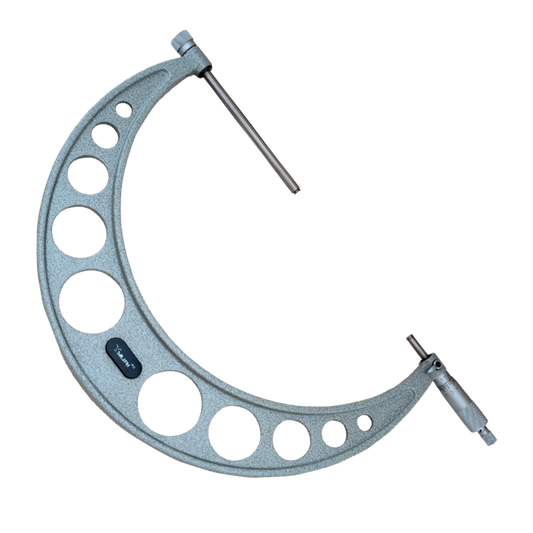
Yuri Tools Interchangeable Anvil Micrometer 0.01mm with Carbide Faces
Regular price Rs. 0.00Regular priceUnit price per -
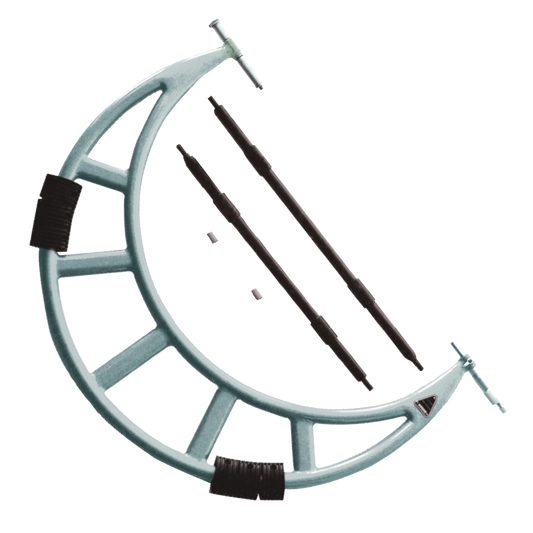
Yuri Tools Adjustable Anvil Micrometer 0.01mm with Painted Frame
Regular price Rs. 0.00Regular priceUnit price per -
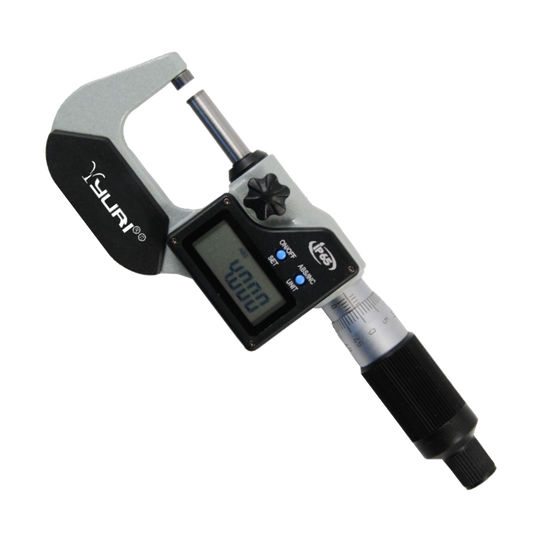
Yuri Electronic Outside Micrometer
Regular price Rs. 0.00Regular priceUnit price per -
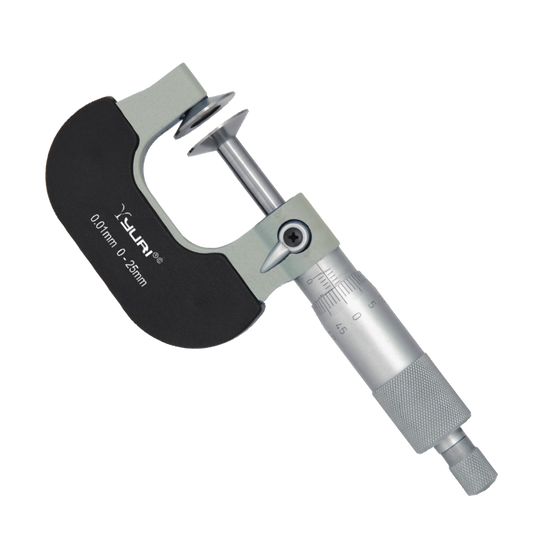
Yuri Tools Disk Micrometer 0.004mm Accuracy with Disc Faces
Regular price Rs. 0.00Regular priceUnit price per -
Yuri Tools Digit Outside Micrometer 0.01mm with Mechanical Counter
Regular price Rs. 0.00Regular priceUnit price per -
Yuri Tools Depth Micrometer 0.01mm with Interchangeable Rods
Regular price Rs. 0.00Regular priceUnit price per
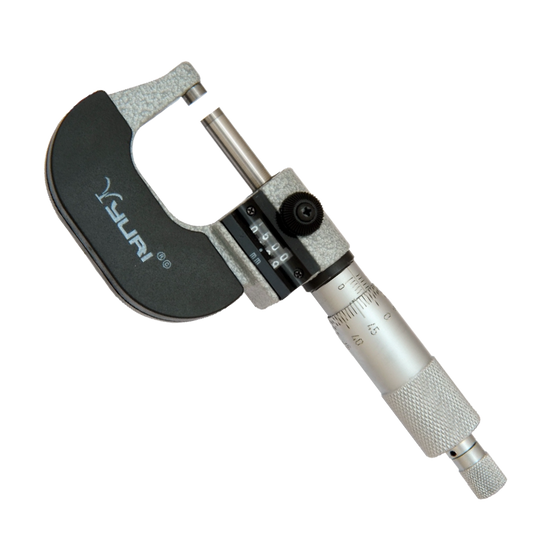
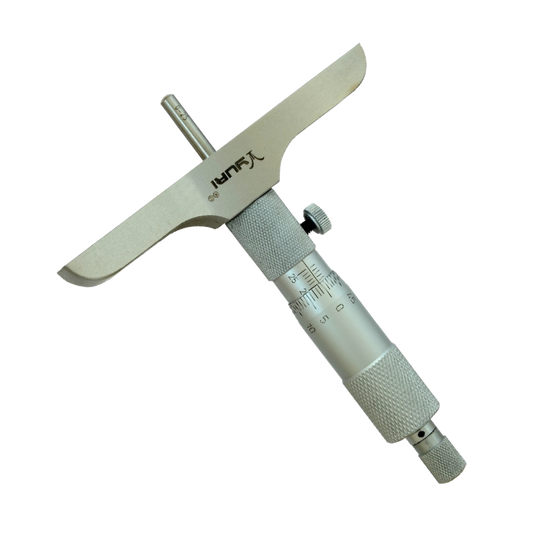
Micrometers Built for Accurate Workshop Measurement
Micrometers are small tools, but in a workshop they can make a big difference. When a part has to fit properly, a rough guess is not enough. A small change in thickness, diameter, depth, or clearance can affect how smoothly a job is completed. That is why mechanics, fabricators, machinists, technicians, and maintenance teams often keep a micrometer close to their workbench.
Yuri micrometers are made for users who need reliable measurement during daily work. They are useful when you want to check a shaft, bearing, metal sheet, machined part, pipe, fastener, or component before assembly. In real working conditions, accurate measuring helps reduce rework, material waste, poor fitting, and unnecessary delays.
For Indian workshops and job sites, a measuring tool needs to be practical. It should be easy to read, comfortable to hold, and dependable enough for regular use. Whether the work is happening in a fabrication unit, repair shop, machinery workshop, training center, or maintenance department, a good micrometer gives the user more confidence before cutting, fitting, drilling, or assembling a part.
Why Micrometers Are Useful
A micrometer is used when normal measuring tools are not accurate enough. A measuring tape or scale is fine for larger dimensions, but it cannot give the same level of detail as a micrometer. When a worker needs to measure small differences, especially on metal parts, a micrometer becomes a much better choice.
This is especially important in jobs where one part must fit into another part. If a shaft is slightly oversized, it may not fit. If a component is too thin, it may fail during use. If a gap is too wide, the final assembly may feel loose. A micrometer helps catch these issues before the work moves further.
- Checking outside diameter of shafts, rods, and round parts
- Measuring thickness of metal sheets, plates, and small components
- Inspecting machined parts before assembly
- Checking wear on parts during repair and maintenance
- Supporting quality checks in workshops and production units
- Helping technicians reduce fitting mistakes and material wastage
Why Choose Yuri Micrometers
A micrometer should feel simple in the hand, but it must do a serious job. The reading should be clear, the movement should feel smooth, and the frame should be strong enough to handle regular workshop use. Yuri micrometers are designed with these everyday needs in mind.
Many users do not need a measuring tool that only looks good in a box. They need something that can be used on the shop floor, near machines, during inspection, or while checking parts after finishing work. Yuri focuses on practical measuring support for people who work with tools every day.
- Useful for accurate measurement of small parts
- Suitable for fabrication, maintenance, repair, and machining work
- Comfortable for repeated checking during the day
- Helpful for technicians who need better control over part dimensions
- Practical for workshops, training centers, and industrial users
- Easy to include in a regular tool kit or inspection bench setup
Where Micrometers Fit in Daily Workshop Work
A micrometer is not used only at the end of a job. In many workshops, it is used throughout the process. A worker may measure raw material before cutting, check a component after machining, inspect a part before fitting, and measure it again after finishing. This step-by-step checking helps avoid surprises later.
Measurement also connects with other workshop tools and machines. For example, teams working around pneumatic tools or an air compressor machine often need to check fittings, couplers, small metal parts, and service components before replacement or assembly. A portable air compressor may support site work, but the parts used with it still need proper measurement when accuracy matters.
The same applies to fabrication and repair work. A part may look correct from a distance, but the final fit depends on the actual size. A micrometer helps users check that detail instead of relying only on judgment.
How to Choose the Right Micrometer
Choosing the right micrometer depends on what you measure most often. For general workshop use, outside micrometers are commonly used because they help measure thickness and outside diameter. For more specific inspection work, users may need different measuring instruments depending on the shape of the part and the level of accuracy required.
The size range is important. A micrometer must cover the measurement range you actually use. A tool that is too small or too large for the job will not be convenient. The reading style also matters. Some users are comfortable with manual readings, while others prefer digital style readings for faster checking.
- Check the measurement range before selecting the tool
- Choose a model that suits the parts you measure regularly
- Look for smooth spindle movement and easy reading
- Make sure the tool feels stable in hand
- Keep accuracy needs in mind, especially for machining and quality checks
- Store it safely so the measuring faces stay protected
Applications of Yuri Micrometers
Yuri micrometers can be used across different professional environments. In machine shops, they help check turned parts, shafts, bushings, sleeves, and small mechanical components. In fabrication units, they are useful for checking material thickness before welding, cutting, grinding, or fitting. In maintenance departments, they help inspect wear and confirm whether a part can still be used or should be replaced.
For alignment and inspection work, many teams also use dial indicators along with micrometers. A dial test indicator is helpful for checking movement, runout, and alignment, while a micrometer is useful for confirming exact thickness or diameter. When both tools are used properly, the inspection process becomes more dependable.
In training centers and technical institutes, micrometers are also helpful for teaching students how real measurement works. They learn that a part is not only judged by how it looks, but also by whether it matches the required size. This habit becomes useful once they start working on actual machines and workshop projects.
- Machining and metalworking
- Automotive repair and maintenance
- Fabrication and welding units
- Tool rooms and inspection benches
- Industrial maintenance teams
- Technical training institutes
- Quality checking and part inspection
Micrometers for Site and Industrial Support Work
Some people think micrometers are only for clean machine shops, but they are also useful in site support and repair work. When machines are used in tough conditions, parts wear out over time. Checking that wear properly can help the team decide whether a part needs adjustment, replacement, or further inspection.
For example, contractors using a concrete cutter machine may need to inspect small parts, fittings, shafts, blades, spacers, or service components during maintenance. A concrete cutting machine or concrete cutter handles heavy work, but small dimensional checks still matter when the machine is being serviced or prepared for the next job.
In simple words, measurement supports better tool life and better working decisions. It helps workers avoid forcing parts together, using worn components for too long, or guessing when a clear measurement would give a better answer.
Who Can Use Yuri Micrometers?
- Machinists
- Fabricators
- Mechanical technicians
- Automotive workshops
- Industrial maintenance teams
- Quality inspection staff
- Tool room workers
- Technical students and trainers
- Repair and service teams
Care and Maintenance Tips
A micrometer should be handled with care because even a small dent, dust buildup, or rough handling can affect the reading. It is always better to clean the measuring faces before use and store the tool in a safe place after work. Do not throw it into a toolbox with heavy tools, cutting discs, drill bits, or loose metal parts.
- Clean the measuring faces before and after use
- Do not overtighten the micrometer on the part
- Keep it away from moisture and heavy dust
- Store it in its box when not in use
- Avoid dropping it on hard surfaces
- Check calibration regularly if used for precision work
- Do not use it as a clamp or marking tool
FAQs
What is a micrometer used for?
A micrometer is used to measure small dimensions accurately, such as thickness, outside diameter, and part size. It is commonly used in machining, fabrication, repair, and inspection work.
Is a micrometer better than a scale?
Yes, for small and accurate measurements, a micrometer is much better than a normal scale. A scale is useful for general measurement, while a micrometer is used when the size needs to be checked more precisely.
Can micrometers be used in fabrication workshops?
Yes, micrometers are useful in fabrication workshops for checking material thickness, machined parts, shafts, rods, and components before fitting or assembly.
How should I store a micrometer?
Keep the micrometer clean, dry, and stored in its case. Avoid keeping it with heavy tools or loose metal parts that can damage the measuring faces.
Who should use a micrometer?
Micrometers are useful for machinists, mechanics, fabricators, maintenance teams, quality inspectors, tool room workers, and technical students.
Explore Yuri Micrometers
Yuri micrometers are built for users who need accurate measurement in daily workshop and industrial work. They help professionals check parts properly before fitting, finishing, repairing, or assembling. For anyone working with machines, metal parts, tools, or maintenance jobs, a good micrometer is a simple but important part of the tool setup.
When measurement is done carefully, the whole job becomes easier to control. Parts fit better, mistakes reduce, and the worker can move ahead with more confidence. That is why Yuri micrometers are a practical choice for workshops, service teams, training centers, and industrial users who value accuracy in everyday work.